
Best Stabilizer for Caps and Structured Hats
Posted by The Embroidery Source on Nov 19th 2026
Caps are curved, thick at the seam, and stitched on a frame instead of a hoop, which makes them one of the hardest items to embroider well.
Cap Backing is a heavy tearaway that supports the crown so the cap doesn’t collapse or distort while it stitches. For unstructured caps with low stitch counts, Cap Backing 2.5 oz is enough.
Cap backing chart
On a phone, swipe the table sideways to see every column.
| Cap | Recommended TES cap backing | Needle |
|---|---|---|
| Structured caps | Cap Backing 3.0 oz or Cap Backing 3.5 oz | 80/12 to 90/14, sharp or extra slim ball point |
| Unstructured caps, low stitch counts | Cap Backing 2.5 oz | 80/12 to 90/14, sharp or extra slim ball point |
| Unstructured caps, medium stitch counts | Cap Backing 3.0 oz | 80/12 to 90/14, sharp or extra slim ball point |
| Any cap, any stitch count | Cap Backing 3.5 oz, the all-around choice | 80/12 to 90/14, sharp or extra slim ball point |
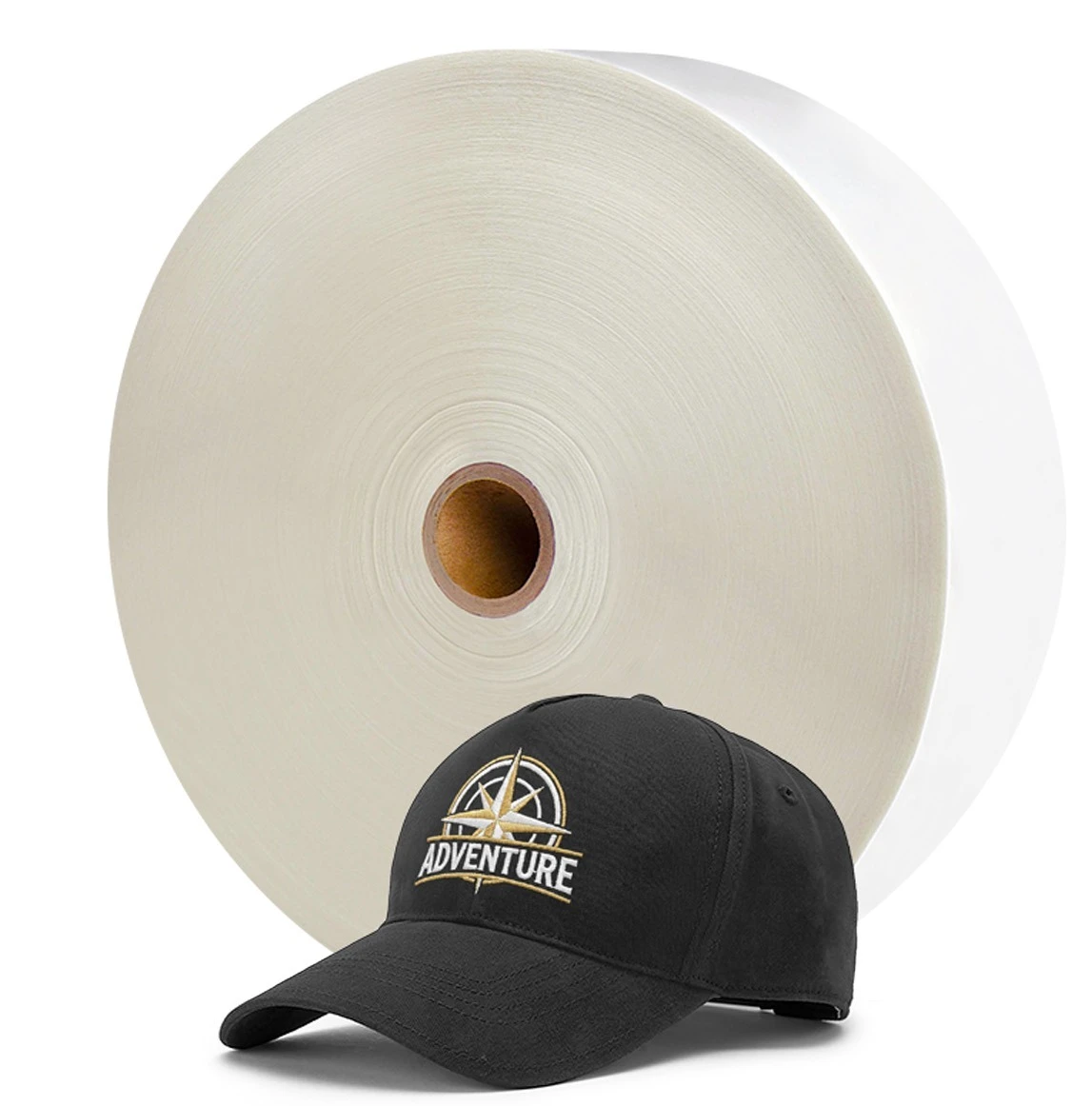
Why caps need cap backing
- It supports the crown, reducing shifting and keeping the design crisp.
- It helps regulate bobbin tension. A heavy backing adds resistance as the bobbin thread is drawn up, which helps keep bobbin thread from showing on top of cap embroidery.
- It tears away cleanly, right up to the stitch line, so the inside of the cap stays neat.
Some embroiderers stitch through the cardboard that comes packed inside caps, as if it were stabilizer. It dulls needles quickly and leaves debris in the hook assembly. Use a stiff cap backing instead.
Cap frames and cap backing sizes
Cap backing comes in different heights and widths to fit different cap frame styles.
| Cap frame | Embroidery area |
|---|---|
| Standard cap frame | The cap front sits in a “cage.” Embroidery height is limited to about 2.5". |
| Wide (270°) cap frame | A double-band frame with a wider embroidery area, including ear-to-ear designs. Uses longer cap backing. |
| Aftermarket frames | Allow a taller embroidery area. |
Tips for better cap embroidery
Common mistakes
- Using packing cardboard as backing. It dulls needles and leaves debris in the hook.
- Using a light tearaway on caps. The crown collapses and the design distorts. Use Cap Backing 3.0 or 3.5 oz.
- Ignoring visor fit. A cap that doesn’t fit the frame bounces.
- Using a 75/11 needle on structured caps. It can deflect on the thick front seam. Use 80/12 or heavier.
Frequently asked questions
Q.What stabilizer do I use for structured caps?
Cap Backing 3.0 oz or 3.5 oz, a heavy tearaway designed for caps.
Q.Do I need stabilizer on unstructured hats?
Yes. Use Cap Backing 2.5 oz for low stitch counts, or 3.0 to 3.5 oz for higher stitch counts.
Q.Why does my cap design shift?
Usually the cap isn’t supported or it bounces in the frame. Use a heavy cap backing, make sure the visor fits the frame’s curve, and support the crown.
Q.Why is bobbin thread showing on top of my cap embroidery?
A heavyweight cap backing adds resistance that helps keep the bobbin thread underneath. Also check your bobbin tension with an H or I test.
Q.What needle should I use for caps?
An 80/12 to 90/14, in a sharp or extra slim ball point. On soft, knit-style caps, use a light ball point.